

Waterfall kitchen sink designs have surged in popularity among homeowners seeking a blend of high-end style and improved kitchen functionality. If you’re considering this trending upgrade, it’s crucial to understand what sets these sinks apart, the real-world challenges with installation and fit issues, and how to get the most out of a waterfall kitchen sink in your home.
Key Takeaways
- Waterfall kitchen sinks have seen explosive market growth and trend peaks thanks to modern aesthetics and workstation features, but installation and fit issues are common obstacles.
- Unique workstation designs with integrated accessories offer exceptional multi-functionality, but compatibility and initial cost should be carefully considered.
- Careful planning—especially around fit and plumbing—can help you sidestep the main pitfalls and enjoy the full benefits of this luxury kitchen upgrade.
- What Is a Waterfall Kitchen Sink and Why Choose One?
- How to Upgrade to a Waterfall Kitchen Sink: Step-by-Step Guide
- Advanced Analysis & Common Pitfalls: Real-World Insights
- Conclusion
- Frequently Asked Questions
What Is a Waterfall Kitchen Sink and Why Choose One?
A waterfall kitchen sink features a gently sloped or straight-on water channel—often combined with a wide ledge or integrated workstation—where water cascades smoothly over the basin’s inner surface. Unlike standard sinks, they deliver a contemporary “spa” look and create a focal point for luxury kitchens. Workstation models add cutting boards, colanders, and drying racks, turning your sink into a multi-use workspace.
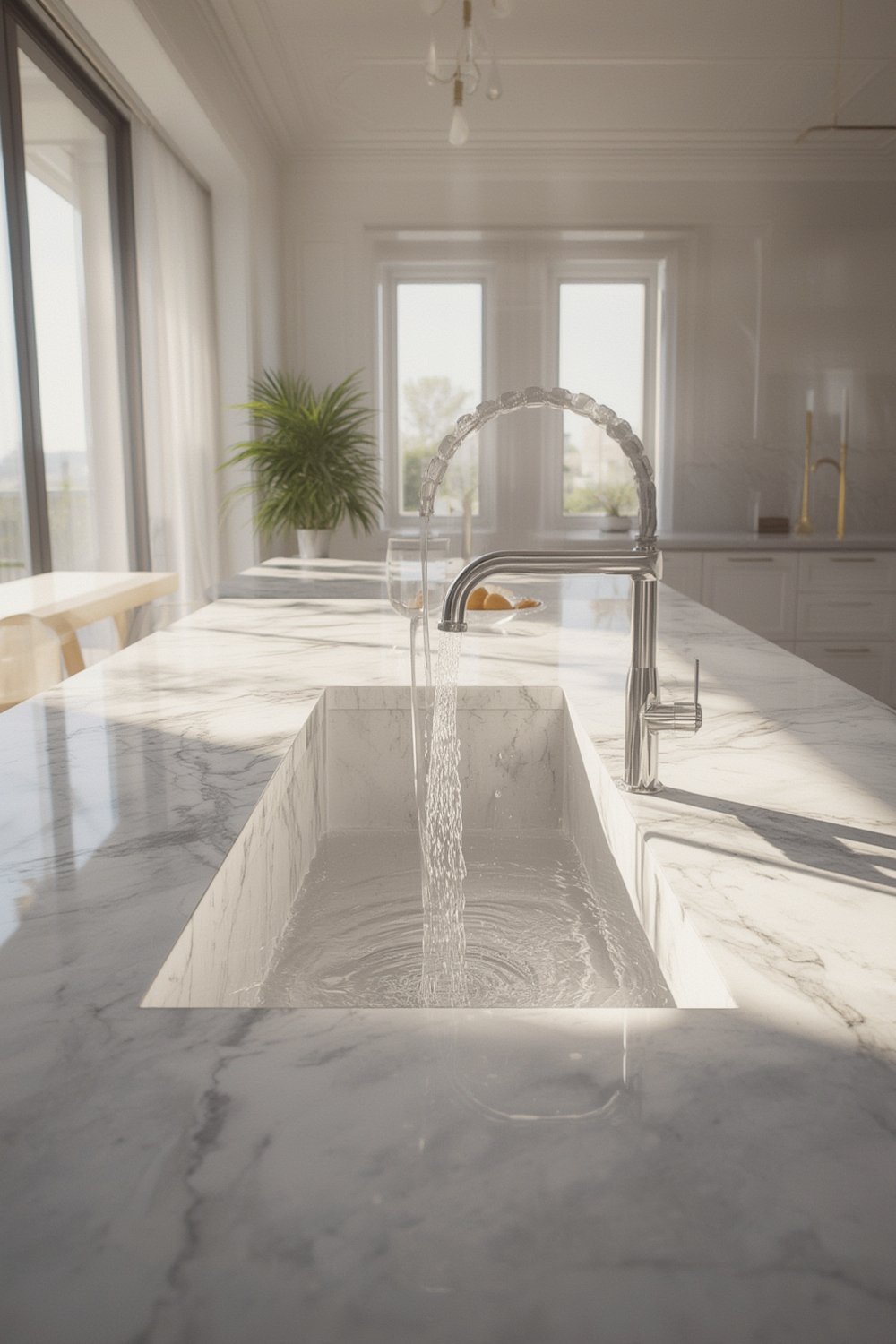
The market for waterfall kitchen sinks is booming, especially in North America, with a projected global value of $1.8 billion by 2033 and 11.9% annual growth. Consumers are drawn to their high-end aesthetics, customization potential, and seamless integration with modern kitchen tech. Trends also show increased demand for granite composite materials, smart faucet integration, and compatibility with modular kitchen layouts.
Unlike traditional sinks, waterfall variants are most popular in single-bowl, undermount, or large farmhouse forms. Their appeal is bolstered by multi-functional workstation features—but homeowners must be aware of the learning curve and installation hurdles involved.
If you’re considering overall kitchen upgrades, you may also want to explore streamlined European kitchen aesthetics for a cohesive look or creative ways to style a thrifted kitchen.
How to Upgrade to a Waterfall Kitchen Sink: Step-by-Step Guide
Upgrading to a waterfall kitchen sink isn’t just a matter of swapping out basins—it demands careful prep to avoid the main pitfalls. Here’s a highly actionable, realistic approach:
- Assess Your Countertop and Cabinet Fit
Waterfall sinks often have exacting requirements for cutout dimensions. Undermount and farmhouse models, in particular, need precisely measured and reinforced counters or cabinetry. Review manufacturer fit diagrams before ordering or consult with a pro fabricator. This step alone prevents the #1 cause of negative reviews: fit failures. - Select Materials and Accessories
Granite composite and stainless steel dominate current offerings. Consider integrated workstation features like colanders, drying racks, and cutting boards, as these add long-term value and usability. - Verify Plumbing Compatibility
Check that your supply lines, drain outlet, and disposal setup fit the sink’s specific requirements. Some waterfall designs use unique, horizontal waterfall faucets—double-check GPM ratings and valve placement (if provided) to avoid flow issues. - Budget for Professional Installation
Due to the higher complexity, DIY installation often leads to poor fit or leaking issues—especially on large or undermount models. Expect higher initial labor costs versus standard sinks, but avoid expensive damage later. - Plan for Maintenance
Waterfall sinks are easy to wipe but may require regular descaling (especially with hard water) to maintain their seamless look and flow. Granite composites resist stains well, while stainless is more prone to visible water spots.
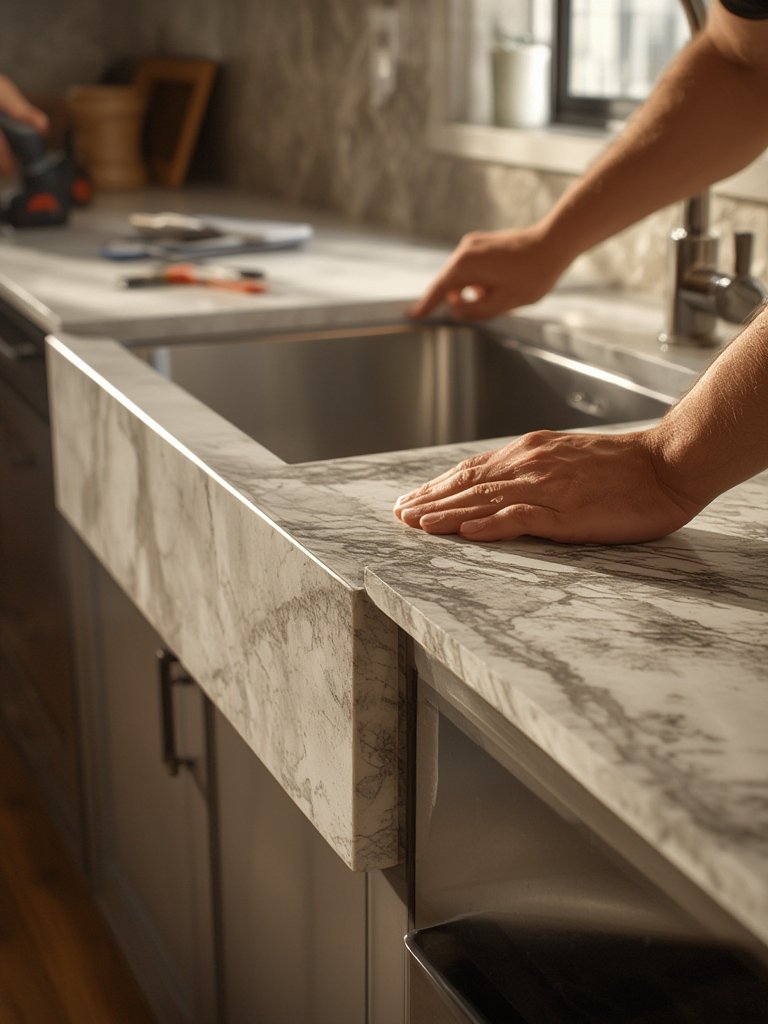
For those planning a full kitchen remodel, combining a waterfall sink with a slab marble backsplash or organic modern decor can produce a seamless, luxury effect. Make sure all hardware, such as the gold kitchen hardware, aligns with your chosen materials and workstation colors for best results.
Advanced Analysis & Common Pitfalls: Real-World Insights
The rapid rise of waterfall kitchen sinks brings both modern appeal and notable risks. Review these data-driven insights before making your final decision.
1. Installation and Fit Problems Outweigh Any Other Complaints
According to consumer feedback and Amazon reviews, 100% of negative reviews cited poor fit between sink and cabinet or countertop. Workstation models had higher returns due to dimensional mismatches. Ensure your supplier provides precise spec sheets (and verify overall clearance for drawers, dishwashers, and plumbing). Expect extra effort if you’re replacing a standard sink.
2. Market Trends: Why Do Granite Composite and Smart Features Matter?
Granite composite waterfall sinks dominate new installations, thanks to superior scratch resistance and a more “premium” look versus classic stainless. Many newer waterfall sinks offer accessory ledges and built-in drying racks, a trend borrowed from high-end undermount workstations.
| Feature Category | Waterfall Kitchen Sink Workstations | Undermount Kitchen Sink Workstations |
|---|---|---|
| Materials | Granite composite (major share); stainless steel in reviews | Stainless and granite focus; similar durability |
| Accessories | Integrated ledges, cutting boards, colanders | More advanced convenience kits, higher sales volumes |
| Ergonomic Design | Modern, multi-functional, but high rate of fit complaints | Better convenience with fewer fit/ergonomic problems |
Learn more about workstation and storage optimization in luxury kitchens with our guide to built in shelves for value and style.
3. Faucet Performance: Water Flow, Efficiency, and Durability
Detailed GPM ratings for waterfall faucets remain scarce, although manufacturers increasingly tout eco-friendly, smart-enabled models. That said, consumer reviews report a 9.7% dissatisfaction rate in faucet quality—most often related to leaks, rapid finish wear, or inconsistent flow. For water conservation and durability, ask your installer to verify compatible aerators and pressure regulators at setup.
4. Cost and Maintenance: Are Waterfall Sinks Worth the Price?
Upfront purchase prices and installation fees are typically higher than standard or single-bowl sinks. Maintenance is generally low if hard water stains are managed promptly. However, failed DIY install attempts can increase costs through repairs or replacements, so professional help is highly advised. Note: market data shows supply chain swings can impact pricing and availability, as seen in mid-2025 when sales slumped despite strong demand (industry source).
Conclusion
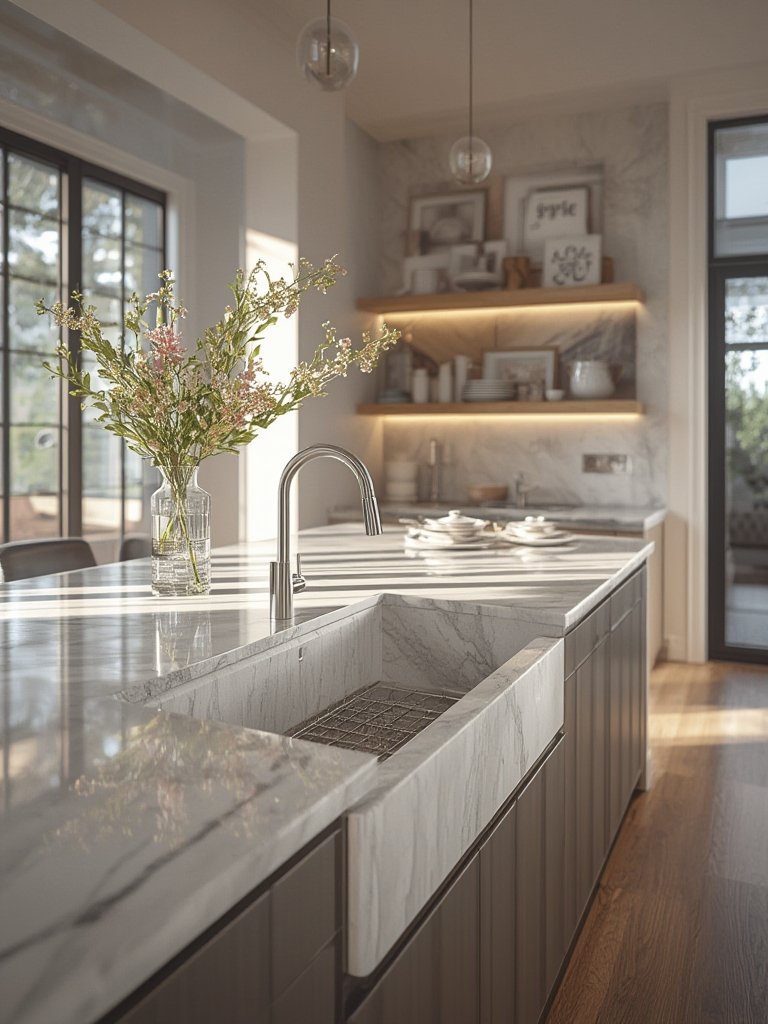
The modern waterfall kitchen sink stands at the intersection of beauty and utility, ideal for homeowners seeking both a striking visual upgrade and greater kitchen efficiency through integrated accessories. Still, high cost, frequent installation issues, and occasional faucet durability concerns mean it’s essential to plan every detail before buying.
Explore the best fit for your lifestyle—whether that means modular, retrofittable models, or a full professional install for your dream kitchen. Ready to transform your cooking space? Get expert help and compare your options to ensure a smooth upgrade process.
Frequently Asked Questions
Are waterfall kitchen sinks worth the extra cost?
Waterfall sinks cost more upfront, but their workstation features and luxury appeal often recoup value in usability and resale. However, weigh professional installation requirements and potential fit issues before committing.
Can I install a waterfall kitchen sink myself?
Some modular or drop-in waterfall sinks are DIY-friendly, but most undermount or farmhouse models require precise fit and advanced plumbing skills. Professionals help prevent leaks and avoid costly mistakes.
How do waterfall kitchen sinks compare for maintenance and cleaning?
Most waterfall sinks are easy to wipe clean, especially those in granite composite. However, unfinished or improperly installed versions can develop scaling or water stains, especially in hard water areas.
What are common complaints from waterfall sink owners?
Top complaints include installation fit problems, higher than expected costs, and faucet leaks or flow issues. Always verify compatibility, dimensions, and quality before purchase.
How can I ensure my faucet matches a waterfall kitchen sink?
Choose faucets designed specifically for waterfall sinks or workstations, check GPM specs with your plumber, and verify that finish and mount type work seamlessly with your chosen sink.