

AI mirror technology is changing home fitness, offering intelligent coaching, real-time feedback, and deep personalization, all from a device that looks like a stylish regular mirror. But is it really the future of fitness at home, and what should you know before investing?
Key Takeaways
- The AI mirror market is booming, with annual growth rates up to 16.8% through 2030, driven by home fitness demand.
- Current AI mirrors promise smart coaching and personalization, but public reviews and technical benchmarks are scarce.
- Critical features and downsides like app compatibility, accessibility, and ongoing costs are often overlooked but essential to consider.
- What Is an AI Mirror and Why Is It Trending?
- How to Get Started with an AI Mirror for Home Fitness
- Advanced Analysis & Common Pitfalls of Using AI Mirrors
- Conclusion
- Frequently Asked Questions
What Is an AI Mirror and Why Is It Trending?
An AI mirror is a smart reflective device built for fitness, wellness, or personal care. It doubles as a regular mirror and a high-tech tool: using cameras, sensors, and artificial intelligence, it analyzes your body movements, delivers real-time feedback, and can coach you through workouts or even detect your mood. These mirrors grew popular as consumers demanded more personalized, at-home fitness and wellness solutions—helped along by smart home adoption and AI advances.
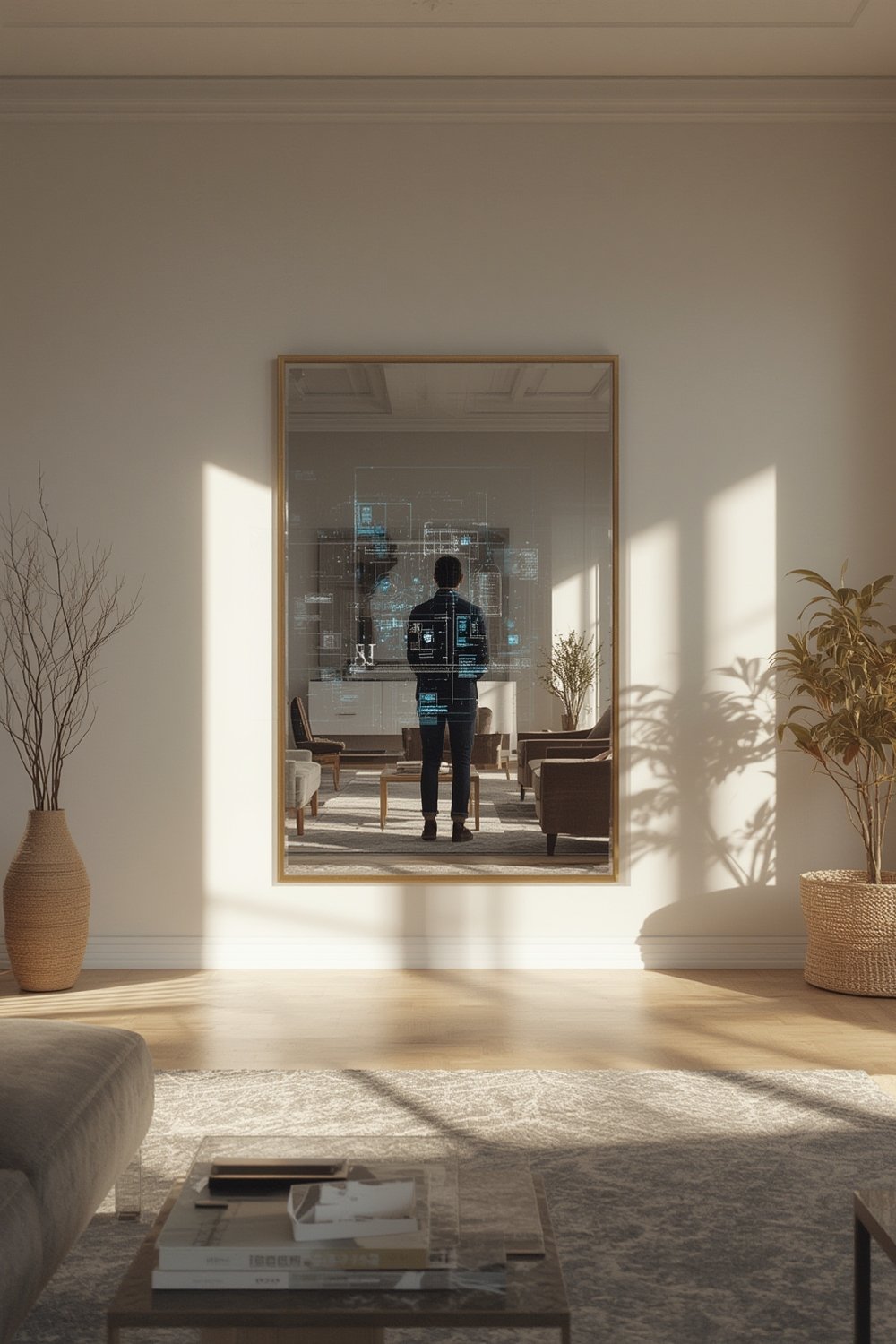
The global smart mirror market was valued between $541 million and $3.5 billion in 2024, with forecasts ranging from $5.6-6.6 billion by 2030 and AI-driven mirrors projected to grow at a rapid 16.8% annual rate (Lucintel). Much of this growth comes from the home fitness segment, where users want convenient access to interactive coaching, personalized routines, and advanced progress tracking (MarketResearch.com).
Many smart mirrors also serve as interior design centerpieces, seamlessly fitting into modern living spaces while supporting wellness goals. For those prioritizing a holistic home, these innovations pair easily with other trends like biophilic design or spa-like bathroom upgrades.
How to Get Started with an AI Mirror for Home Fitness
Setting up an AI mirror can seem intimidating, but the process is straightforward when broken down. Here’s exactly how to bring smart, interactive fitness into your home and maximize the benefits.
- Set Your Fitness Goals
Define what you want to achieve: strength training, cardio, flexibility, or overall wellness. AI mirrors excel when you set and track concrete, measurable goals. Document your preferences at setup so the mirror’s AI can personalize recommendations. - Research Models Carefully
Currently, there’s no clear market leader in AI fitness mirrors. Compare features like camera resolution (higher is better for precise feedback), program library size, compatibility with other apps, and user profile options. Take note of any available security features like AI-driven face recognition. Unfortunately, many product listings and reviews skip real tech specs, so keep digging or request details directly from brands. - Budget for Purchase and Subscriptions
Most quality AI mirrors cost upwards of several hundred to a few thousand dollars, and may require ongoing subscriptions for workout programs or analytics. Remember that maintenance and software updates may incur extra fees over time—even though many sources, including Strategic Market Research, don’t break down specifics. Always factor this in, as long-term costs add up. - Install Properly
Follow installation guides carefully. Most AI mirrors are designed for wall-mounting, but ensure your chosen wall can bear the weight, and keep power and connectivity in mind. Some users even retrofit mirrors into wet rooms for hybrid bathroom/wellness spaces—just be sure to follow safety standards. - Customize User Profiles
Set up biometric or face-recognition logins, enter age, weight, and fitness level, and test the system’s feedback. Spend a few days calibrating the settings—many mirrors offer limited accessibility tweaks, but specifics are rarely transparent prior to purchase. - Evaluate the Tech’s Accuracy
Test real-time feedback on form. Many AI mirrors promise accuracy rivaling human trainers, but as of 2026, no public benchmarks exist (Precedence Research). Track how corrections match up with your own knowledge, and watch for false positives or missed cues. - Maximize Program Variety & Motivation
If you want long-term use, choose mirrors with diverse and frequently updated program libraries. Lack of program variety is a top reason for user drop-off. Consider merging with proven home wellness strategies, like walking pad routines, to mix up your sessions.

If privacy and security are must-haves for your home, look for AI mirrors that offer robust authentication and profile management—Baracoda and Commax, for example, are using face and voice recognition to enhance individualized privacy (Precedence Research).
Lastly, actively maintain your system—update software, monitor analytics, and periodically review your privacy settings to stay ahead of feature creep or data vulnerabilities. Remember, there’s often a significant gap between smart mirror marketing promises and actual, user-friendly performance.
Advanced Analysis & Common Pitfalls of Using AI Mirrors
AI mirrors hold potential—but the home fitness experience isn’t perfect. Here’s what current data, technical limitations, and under-reported downsides reveal.
- Unclear Subscription and Cost Structure:
Most reviews and product listings don’t clearly publish pricing for hardware or recurring content—making it easy to underestimate long-term spend. - Lack of Technical Benchmarks:
No third-party studies or technical benchmarks compare AI mirror form feedback accuracy to in-person coaching. Expect a learning curve in trusting the system’s guidance. - Incomplete App Ecosystem:
Today, integration with third-party fitness apps (Apple Fitness, Peloton, etc.) is rare or opaque. You may be locked into a brand’s own ecosystem, limiting exercise variety. - Accessibility Shortcomings:
Accessibility—including adaptive UI for disabilities or physical limitations—is seldom addressed. If accessibility is central for your setup, demand clarifications before purchase. - Privacy & Data Collection:
AI mirrors use cameras, microphones, and biometrics. Most brands claim secure local processing or face recognition authentication, but lack detailed privacy disclosures. Mood-detection and emotion analysis, as seen in mirrors like Baracoda’s BMind, amplify concerns if security isn’t robust. - Lack of Long-Term Use Data:
No reliable statistics exist for user retention past initial adoption. Churn rates may be high if programming is not consistently updated or engaging.
| AI Mirror Strength | Current Limitation | Actionable Advice |
|---|---|---|
| Real-time form correction | No published accuracy standards vs. human coaching | Cross-reference corrections with your own technique/record video for reference. |
| Personalized routines via AI | Opaque algorithms, limited accessibility tuning | Request info on adjusting programming and adaptation for all body types/abilities. |
| Profile security with biometrics | Limited disclosure on data usage/storage | Demand upfront privacy policy details—especially around video and biometrics. |
| Motivational design and trending aesthetics | Long-term engagement and value poorly studied | Integrate with proven habit systems and evolving home design for motivation. |
Looking for alternatives or to complement your AI fitness mirror? Explore other home wellness upgrades—such as cold plunge tubs for recovery or a smart home security system—to create a holistic, intelligent living space.
Conclusion
The rise of AI mirror devices signals a shift in home fitness and wellness. While the benefits—convenient coaching, personalized routines, and seamless integration into modern interiors—are appealing, there’s a real need to dig beneath marketing claims. Transparent pricing, trusted privacy standards, and real technical benchmarks remain elusive. If you are ready to experiment and stay vigilant on cost and privacy, an AI mirror could become the centerpiece of your smart fitness journey.
Ready to upgrade your home with an ai mirror? Research carefully, start small, and always prioritize privacy and your real fitness needs.
Frequently Asked Questions
How much do AI mirrors for home gyms typically cost?
Exact prices aren’t widely published. Most advanced smart mirrors with AI coaching run from several hundred to a few thousand dollars, with ongoing subscriptions likely for premium content and features.
Are AI mirrors as accurate as human personal trainers?
There are currently no published third-party studies comparing their form correction accuracy to that of professional trainers. AI mirrors offer real-time cues, but may miss complex movements or nuance.
What privacy risks come with AI mirrors?
AI mirrors often use cameras, microphones, and biometric data for authentication and tracking. Privacy risks stem from unclear data storage and sharing practices. Some brands now offer face- or voice-recognition for profile protection, but always request up-to-date privacy policies.
Do AI mirrors work with popular fitness apps like Apple Fitness or Peloton?
Most AI mirrors currently don’t offer deep integration with third-party fitness apps. Always verify compatibility before purchase if varied workout content is a priority for you.
Can AI mirrors be used by people with disabilities or varied body types?
Accessibility features are inconsistently addressed. Some allow for limited personalization, but adaptive interfaces for disabilities are rarely discussed in-depth in available product specs or reviews.