

Layered kitchen lighting is transforming how homeowners balance practicality and mood, combining several types of light sources to deliver both function and visual warmth in kitchens of all sizes.
Key Takeaways
- Layered kitchen lighting blends task, ambient, and accent fixtures for greater flexibility, safety, and style.
- Energy-efficient LEDs and smart integration are dominating kitchen lighting trends for 2026 and beyond.
- Common pitfalls include uneven brightness, mismatched fixtures, and overcomplicating the design.
- What Is Layered Kitchen Lighting and Why Is It Trending?
- How to Plan and Install Layered Kitchen Lighting (Step-by-Step)
- Advanced Analysis & Common Pitfalls
- Conclusion
- FAQ
What Is Layered Kitchen Lighting and Why Is It Trending?
Layered kitchen lighting is a design approach that uses multiple, strategically placed light sources to achieve balanced illumination for everyday tasks and to set the scene for relaxation or entertaining. Instead of relying on a single overhead light, the layered method combines:
- Task lighting: Focused, brighter lights (like undercabinet LED strips or spotlights) targeting zones such as counters and stovetops
- Ambient lighting: General illumination via ceiling fixtures, recessed cans, or flush-mounts
- Accent and decorative lighting: Wall sconces, pendants, or even table/floor lamps to add warmth and style
This approach not only gives you flexibility and ease of use, but it also aligns with key 2026 trends: modern homes are favoring comfort, fine control through smart bulbs, and energy savings with LEDs. The market for kitchen lighting reached USD 14.19 billion in 2023 and shows no signs of slowing, as recent research confirms consumers want functional, visually appealing solutions.
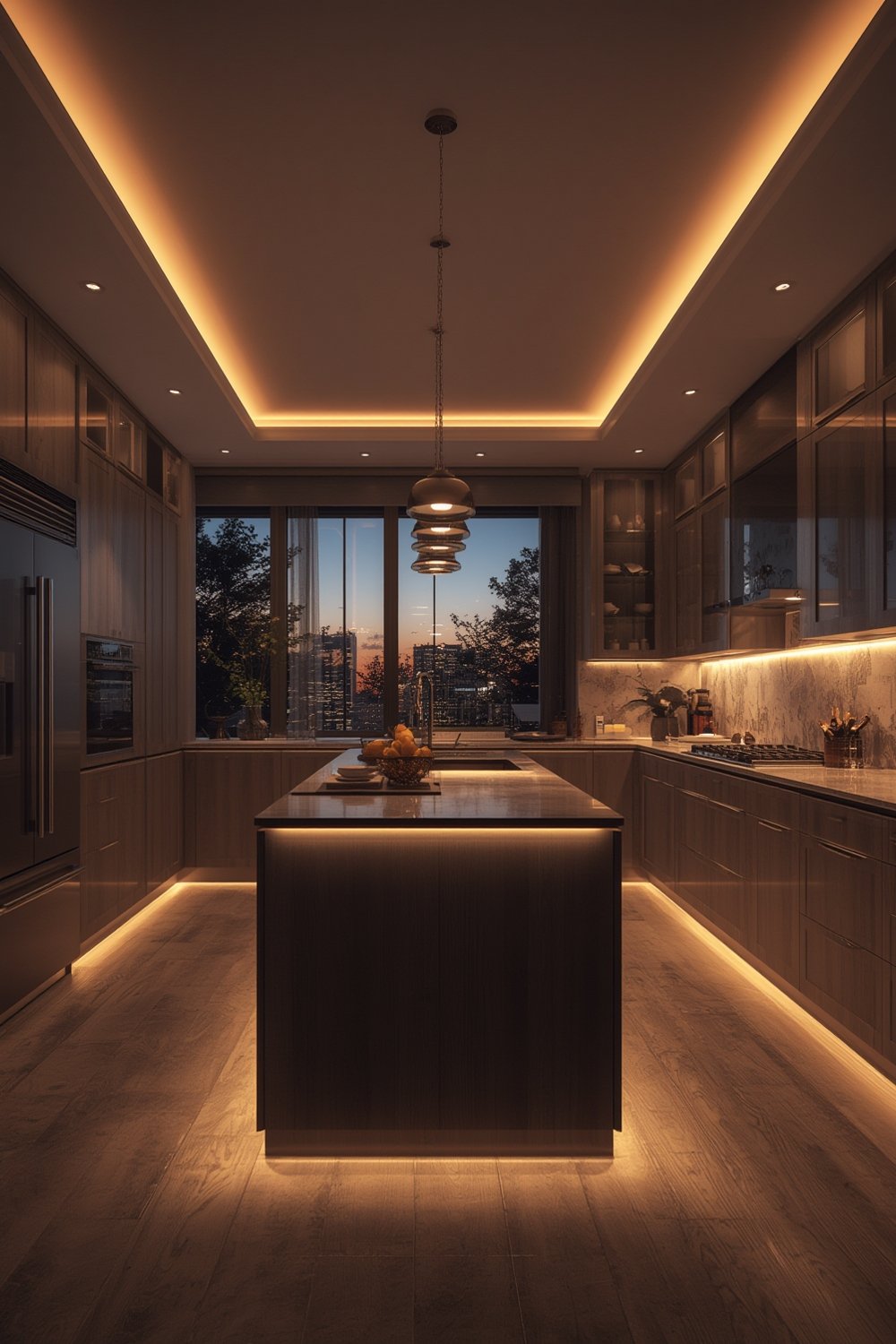
Layered lighting solves common issues like harsh shadows, dark corners, or bland, flat-looking kitchens. It also provides safer, clearer workspaces while adding personality, whether you lean toward natural materials or striking metallic finishes. Trends now highlight undercabinet strips, sculptural pendants, and cozy wall sconces that double as both practical and statement pieces.
For more kitchen decor inspiration, explore ideas like the pillar candle centerpiece for your dining space, or embrace organic modern kitchen decor to further personalize your home.
How to Plan and Install Layered Kitchen Lighting (Step-by-Step)
Designing an effective layered kitchen lighting scheme isn’t just about adding more fixtures; it requires strategic planning and smart fixture selection for functionality, aesthetics, and energy efficiency. Here’s a practical, step-by-step guide:
- Assess functional zones
Identify key kitchen areas: prep zones, stove/cooktop, sinks, breakfast nooks, and dining spots. Note areas prone to shadows or glare. - Select your “base” ambient layer
Choose recessed ceiling cans, flush-mounts, or central fixtures to provide even, general illumination. Opt for warm-toned LED bulbs (around 2700K-3000K) for comfort. - Add focused task lights
Install undercabinet LED strips above counters, adjustable spotlights over islands, or pendants above breakfast bars. Match the task light brightness to the job (aim for at least 400-600 lumens/foot for work surfaces). - Incorporate accent and decorative lighting
This is where wall sconces shine. Place them on open walls or flanking memorable features (like open shelving or artwork) for visual symmetry. Accent lighting should provide 1/3 to 1/2 the brightness of your ambient layer – soft, inviting, and not overwhelming. - Layer controls and smart tech
Connect fixtures to dimmers or smart switches. Consider color-changing or tunable white bulbs for different moods throughout the day. Group lights by zone on circuits or via app for quick transitions from cooking to hosting. - Review color rendering and consistency
Pick bulbs or LED strips with high CRI (Color Rendering Index)—80+ recommended—for truer food and surface colors. Ensure all lights are within the same color temperature range for harmony. - Troubleshoot before finalizing installation
Test placements with temporary lights or rechargeable smart bulbs first. Check for unwanted shadows, glare, dark corners, or visual clutter. Adjust fixture locations or add diffusers as needed.
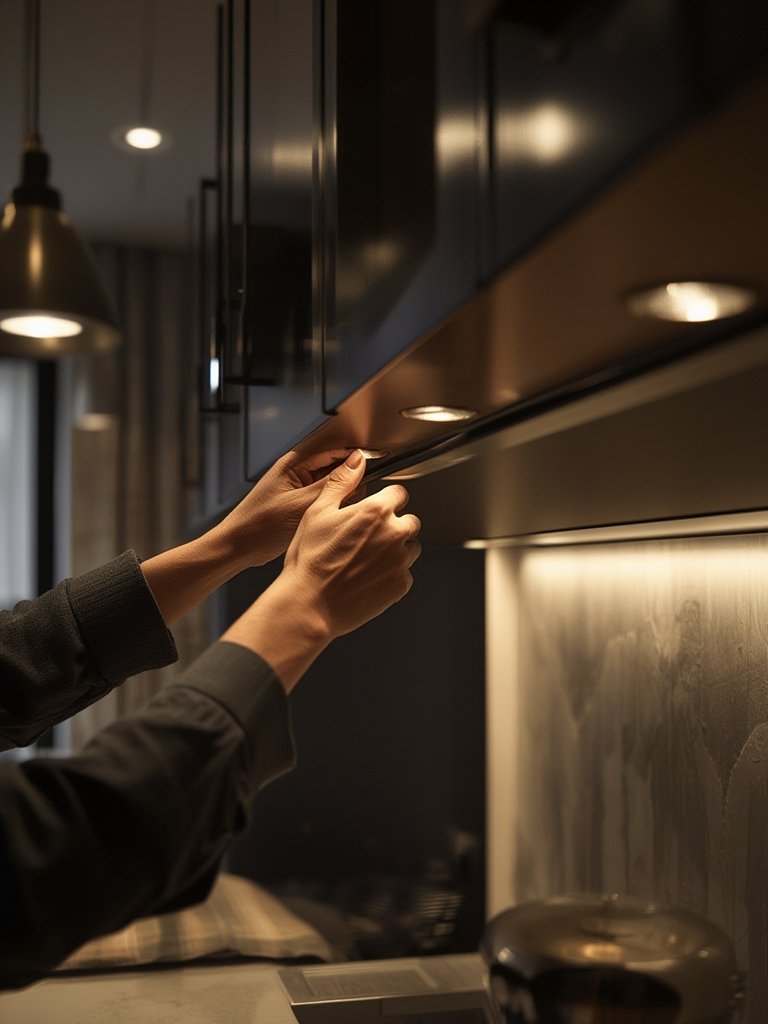
When choosing materials, trends for 2025 into 2026 highlight sculptural brass, curved lines, rattan, and even wood bead fixtures. For more on kitchen style, don’t miss our in-depth look at the European kitchen aesthetic for streamlined elegance and burl wood kitchen cabinets if you love distinctive texture.
For those in small urban spaces, optimizing lighting in your apartment kitchen can make tight layouts feel dynamic and inviting.
Advanced Analysis & Common Pitfalls
While layered kitchen lighting offers big benefits, skipping the planning stages often leads to wasted time, money, and dissatisfaction. Here are realistic challenges and how to avoid them:
- Over-illumination or shadows: Adding too many bright fixtures in close proximity creates glare or “hot spots,” while neglecting corners leaves them underlit and unsafe.
- Mismatched aesthetics: Inconsistent styles, finishes, or bulb color temperatures can clash—detracting from the clean, unified look you want.
- Overcomplicated controls: Without grouping or layering on smart switches, you’ll be left flipping multiple, confusing switches or cycling through app menus for basic adjustments.
- Fixture placement errors: Wall sconces or accent lights, when placed too high/low, can throw unflattering shadows or become impractical for cleaning and maintenance.
- Electrical or retrofit headaches: In older kitchens, adding new wiring for extra circuits or wall lights can be messy and expensive if not planned early. Consider wireless or plug-in sconces for renters or quick retrofits.
| Mistake | Impact | How to Avoid |
|---|---|---|
| Too little variation between layers | Room feels flat or clinical | Dim accent lights and use warmer tones for nooks |
| Forgetting color temp and CRI | Food/prep looks dull or unnatural | Choose 2700K-3000K, CRI 80+ bulbs |
| Skipping dimmable circuits | Can’t relax or customize atmosphere | Install dimmers or smart controls from the start |
| Sconce placement too high/low | Glare in the eyes, poor feature highlight | Mount at eye level (60-65″ from floor) |
| All lights on one switch | Zero flexibility, wasted savings | Split or zone with smart solutions |
If you want a professional-level result but feel overwhelmed by wiring or selecting fixtures, start with wireless or plug-in sconces or “preview” lighting layouts with temporary smart bulbs before installing permanent solutions. Energy-efficient LEDs dramatically reduce long-term running costs, even though they’re pricier up front (industry report). For a closer look at how layered lighting principles work in open-plan spaces, see our living room guide.
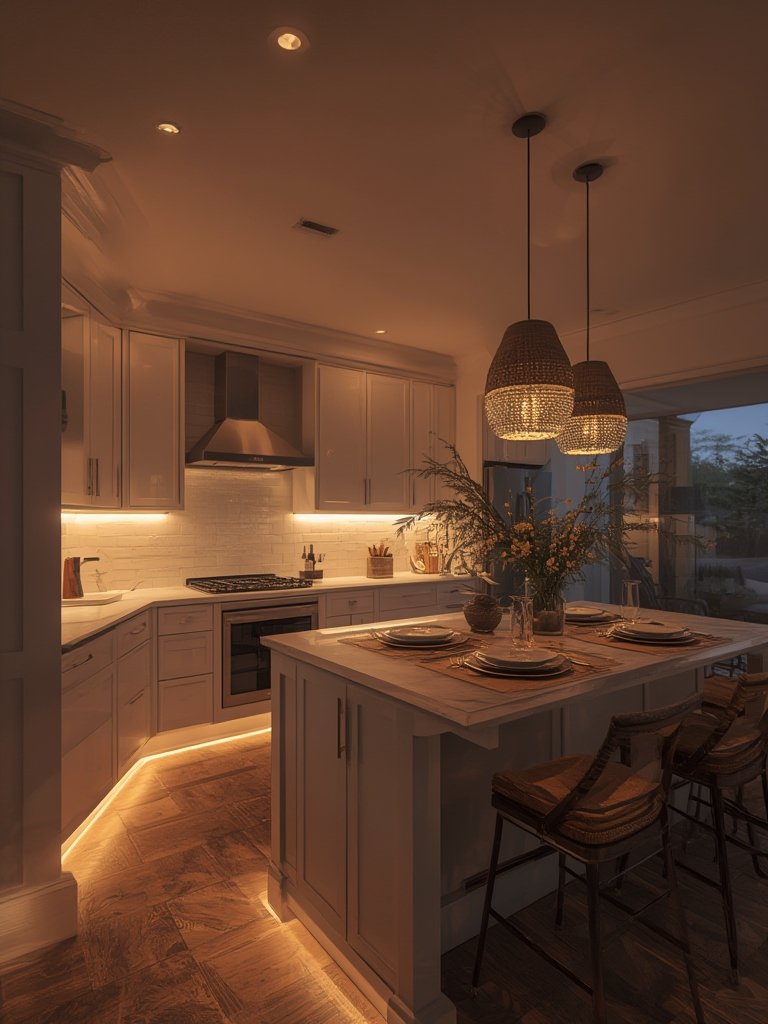
Conclusion
Done well, layered kitchen lighting transforms the look and function of your space—helping you cook, relax, and entertain with ease. The key is careful planning: zone mapping, fixture selection, and using dimmable, energy-efficient LEDs. Always match styles and keep controls simple. As kitchen lighting continues to trend toward versatility and smart tech through late 2025 and 2026, now is the perfect time to upgrade.
Ready to achieve the perfect layered kitchen lighting for your home? Start small with accent upgrades, or consult a lighting designer for a fully custom build. Explore our other guides on saving money on home upgrades or achieving a high-end kitchen look to complement your new lighting scheme.
FAQ
What makes layered kitchen lighting different from traditional lighting?
Unlike single ceiling or fluorescent fixtures, layered kitchen lighting combines multiple light types—task, ambient, accent—so you can tailor brightness and mood for every activity and time of day.
Do I need an electrician for layered kitchen lighting?
In most cases, yes—especially if you’re adding new wired zones, wall sconces, or relocating switches. However, renters or DIYers can use wireless, plug-in, or battery-powered accent lights to avoid hardwiring.
What is the best color temperature for kitchen lighting?
Most kitchens benefit from warm white (2700K–3000K) LEDs. These make food look appealing and keep the space inviting, while cooler lights (3500K+) may feel too clinical for relaxation.
How do smart bulbs enhance layered kitchen lighting?
Smart bulbs let you adjust brightness, color temperature, and even schedule scenes from your phone or with voice commands. This makes it easier to switch quickly from food prep to dining or entertaining modes.
Are decorative wall sconces practical in kitchens, or just for style?
Wall sconces can be both practical and decorative when placed outside of direct splash zones. They’re great for open shelving, breakfast nooks, or highlighting displays, adding soft illumination and personality.